
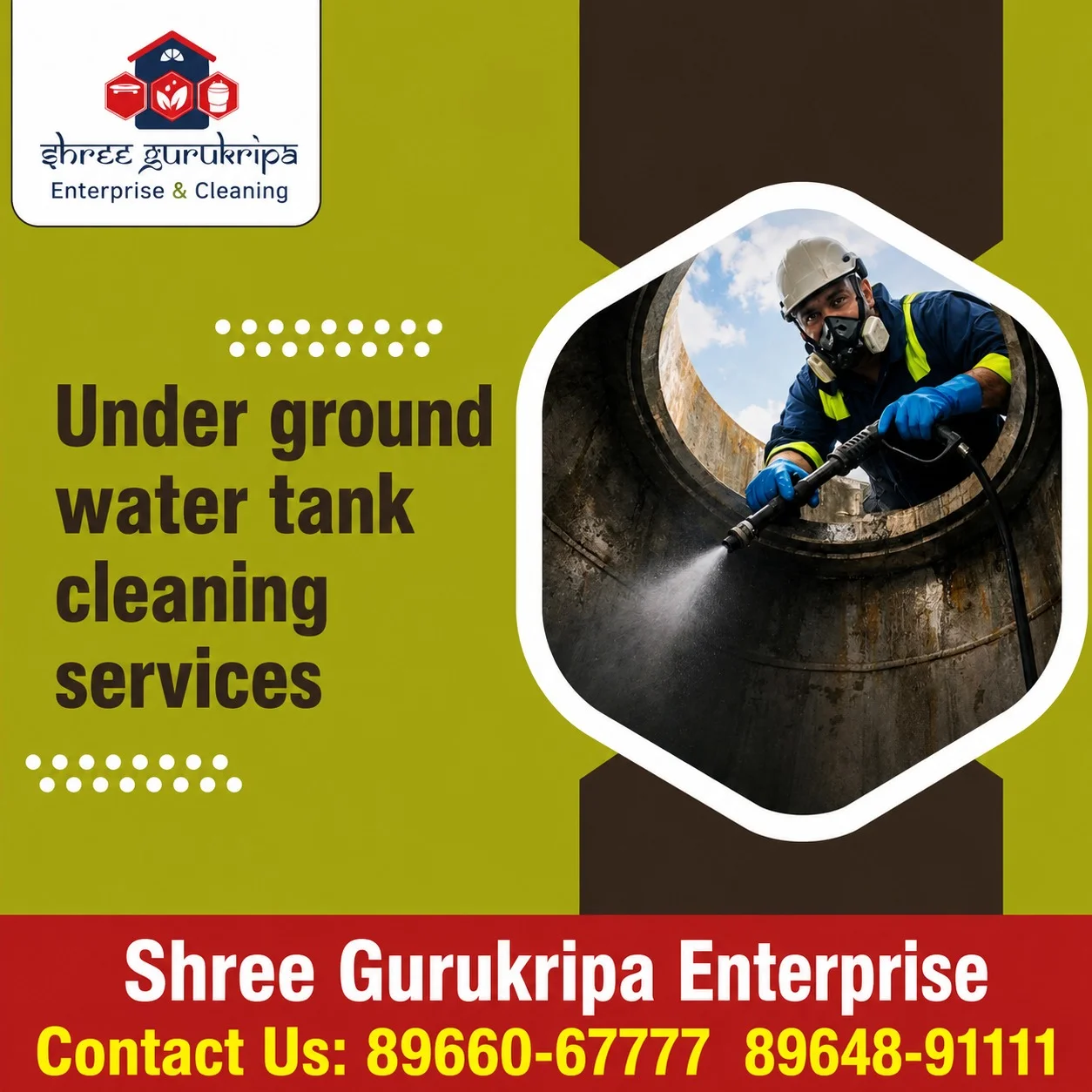
Underground Water Tank Cleaning Services in Indore
Underground Water Tank Cleaning Services in Indore – Professional Tank Cleaning for Homes & Commercial Spaces
An underground water tank is an important part of the water storage system in homes, apartments, offices, schools, hospitals, hotels, factories, and commercial properties. With regular use, dirt, sediment, algae, sludge, and other unwanted deposits may gradually accumulate inside the tank. If cleaning is delayed for a long time, the stored water may develop an unpleasant smell, visible impurities, or reduced cleanliness. Professional Underground Water Tank Cleaning Services help remove accumulated dirt and maintain a cleaner water storage environment.
Shree Gurukripa Enterprise provides professional underground water tank cleaning solutions for residential and commercial properties. With systematic inspection, cleaning, washing, and tank-care procedures, professional service can help keep water storage areas cleaner and better maintained.
Why Is Underground Water Tank Cleaning Important?
Water tanks continuously store water for everyday use. Even when incoming water looks clean, fine particles can gradually settle at the bottom.
Over time, an underground tank may develop:
· Mud and sediment deposits
· Fine dust and dirt
· Sludge at the bottom
· Algae or surface growth
· Unpleasant odor
· Stains on tank walls
· Debris entering through openings
· General buildup caused by long-term storage
Professional underground water tank cleaning helps remove these deposits more thoroughly than basic manual rinsing.
Regular cleaning can also make it easier to inspect the tank for visible dirt, damaged surfaces, leakage, or other maintenance concerns.
Signs Your Underground Water Tank Needs Cleaning
Many property owners do not check the inside of their water tank regularly. However, certain signs may indicate that professional water tank cleaning services in Indore should be considered.
1. Water Appears Cloudy
If stored water begins looking unclear or contains visible particles, dirt or sediment may be present inside the tank.
2. Unusual Smell
An unpleasant smell from stored water can indicate stagnant deposits, contamination, or poor tank maintenance.
3. Sediment at the Bottom
Mud, sand, and fine particles can collect at the base of an underground tank over time.
4. Tank Has Not Been Cleaned for a Long Period
Even when no obvious problem is visible, tanks that have not been cleaned for an extended period may contain accumulated residue.
5. Dirt Around Tank Walls
Visible stains, deposits, or buildup on the inner walls are clear signs that cleaning is needed.
6. After Repair or Construction Work
Dust, cement residue, soil, and debris may enter the tank during nearby construction or plumbing work.
What Is Included in Professional Underground Water Tank Cleaning?
A professional cleaning process usually involves several stages. The exact method may vary depending on tank size, accessibility, level of dirt, and tank condition.
Typical underground tank cleaning services may include:
· Initial inspection
· Removal of stored water
· Removal of sludge and sediment
· Cleaning of tank floor
· Cleaning of inner walls
· Washing of tank surfaces
· Removal of loose dirt and deposits
· Final inspection
· Basic cleaning of accessible tank areas
Professional equipment can help clean areas that are difficult to reach using ordinary household tools.
Deep Cleaning of Underground Water Tanks
Simple rinsing may remove loose surface dirt, but it may not be enough when thick sludge or deposits have accumulated.
Professional deep water tank cleaning focuses on areas such as:
· Tank bottom
· Corners
· Side walls
· Waterline marks
· Sediment pockets
· Hard-to-reach sections
Deep cleaning can be especially useful for tanks that:
· Have not been cleaned recently
· Receive high daily water usage
· Show visible sludge
· Are used in large properties
· Experience frequent dust exposure
· Have undergone plumbing work
A proper cleaning process should focus on removing accumulated physical dirt rather than only making the visible surface look clean.
Underground Water Tank Cleaning for Homes
Residential underground tanks supply water for many everyday purposes.
Professional home water tank cleaning services may be useful for:
· Independent houses
· Duplex homes
· Villas
· Bungalows
· Small apartment buildings
· Rental properties
Family homes often use tank water throughout the day, so keeping the storage system clean is an important part of property maintenance.
Tank cleaning can be scheduled during routine home deep-cleaning or maintenance work.
Water Tank Cleaning for Apartments and Societies
Apartment buildings often depend on large underground storage tanks to manage water supply for multiple families.
Because of higher usage, these tanks can accumulate sediment over time.
Professional apartment water tank cleaning services may help:
· Remove bottom sludge
· Clean larger tank surfaces
· Maintain common storage areas
· Support scheduled property maintenance
· Keep tank interiors easier to inspect
Housing societies can include tank cleaning in their regular building maintenance schedule.
Commercial Water Tank Cleaning Services
Commercial properties may use much more water than residential homes.
Professional commercial water tank cleaning can be useful for:
· Offices
· Hotels
· Restaurants
· Hospitals
· Clinics
· Schools
· Colleges
· Factories
· Warehouses
· Shopping complexes
· Showrooms
High water usage makes regular tank inspection and cleaning particularly important for commercial buildings.
Water Tank Cleaning for Hotels and Restaurants
Hotels and restaurants depend heavily on stored water for daily operations.
Their tanks may require scheduled cleaning due to frequent use.
Professional tank cleaning can support:
· Better maintenance
· Removal of visible sediment
· Cleaner storage areas
· Routine hygiene practices
· Easier inspection of tank condition
Commercial establishments should plan tank cleaning according to usage, capacity, and maintenance needs.
Why Manual Tank Cleaning May Not Be Enough
Some property owners clean underground tanks using buckets, brushes, or basic rinsing.
While this may remove loose dirt, it can be difficult to clean:
· Deep corners
· Thick sludge
· Large tank floors
· Wall deposits
· Hard-to-reach spaces
Professional cleaners may use suitable equipment and structured cleaning methods to make the process more thorough and efficient.
Entering underground tanks can also involve confined-space risks, so tank cleaning should be approached with appropriate safety precautions.
How Often Should an Underground Water Tank Be Cleaned?
There is no single schedule suitable for every tank.
Cleaning frequency may depend on:
· Water source
· Tank size
· Daily usage
· Number of users
· Dust exposure
· Tank construction
· Previous cleaning history
· Visible sediment
A tank that receives muddy or sediment-heavy water may require cleaning more often than a well-maintained tank supplied with relatively clear water.
Regular inspection can help determine when cleaning is required.
Benefits of Professional Water Tank Cleaning
Hiring professional water tank cleaners offers several practical advantages.
Thorough Dirt Removal
Professional cleaning focuses on accumulated sediment, sludge, stains, and loose deposits.
Time Saving
Cleaning a large underground tank manually can be difficult and time-consuming.
Better Access to Difficult Areas
Professional tools can help clean tank sections that are difficult to reach.
Convenient Maintenance
A scheduled cleaning service can make property maintenance easier for homeowners and facility managers.
Tank Condition Inspection
Cleaning also gives an opportunity to notice visible cracks, damage, or leakage concerns that may require separate repair.
Preparing for Water Tank Cleaning
A little preparation can make the process smoother.
Before the service:
· Inform residents or staff about temporary water interruption
· Use stored water before cleaning when possible
· Keep the tank area accessible
· Remove objects blocking the tank opening
· Inform the cleaning team about tank size
· Mention previous leakage or repair work
· Keep electrical connections around the tank protected
For larger commercial properties, tank cleaning may need to be scheduled during low-usage hours.
Underground Tank Cleaning After Monsoon
Rainy weather can increase dust, mud, and environmental debris around many properties.
If the tank lid or surrounding area is not properly maintained, unwanted material may enter the storage system.
Professional water tank cleaning after monsoon can be useful when:
· Water appears muddy
· Sediment has increased
· The tank opening was exposed
· Nearby construction occurred
· Cleaning has been delayed
Inspecting the tank after periods of heavy environmental exposure can help identify whether cleaning is required.
Water Tank Cleaning After Construction
New buildings and renovated properties often generate large amounts of dust and construction debris.
Before regular use, tanks exposed during construction may require proper cleaning.
Professional cleaning can help remove:
· Cement dust
· Soil
· Sand
· Loose building residue
· General construction debris
A clean tank provides a better starting point before normal water storage begins.
Difference Between Tank Cleaning and Tank Repair
Cleaning and repair are two separate services.
Tank cleaning focuses on removing:
· Dirt
· Sludge
· Sediment
· Surface deposits
Tank repair may involve:
· Leakage
· Cracks
· Waterproofing
· Structural damage
· Pipe problems
During cleaning, visible damage may be identified, but repairs should be carried out separately using suitable methods.
Choosing a Professional Water Tank Cleaning Service
When selecting underground water tank cleaners, consider:
· Cleaning method
· Equipment used
· Tank size handling capacity
· Residential or commercial service availability
· Safety practices
· Cleaning process
· Service scheduling
· Experience with underground tanks
A good service provider should explain the cleaning process clearly before beginning work.
Professional Underground Water Tank Cleaning
Underground tanks can easily become “out of sight, out of mind,” but they still require periodic attention.
Shree Gurukripa Enterprise provides Underground Water Tank Cleaning Services for homes, residential buildings, offices, and commercial properties, with a focus on removing accumulated dirt, sludge, and sediment from water storage areas.
Professional cleaning can help property owners maintain a cleaner tank and create a more organized water-storage maintenance routine.
Frequently Asked Questions
1. Why does sludge collect inside an underground water tank?
Fine sand, mud, dust, and suspended particles in incoming water may gradually settle at the bottom of the tank, creating sludge over time.
2. Can underground water tanks be cleaned without removing the water?
Thorough cleaning generally requires the stored water to be removed so that the tank floor, corners, and walls can be properly accessed.
3. How long does water tank cleaning take?
Cleaning time depends on tank size, accessibility, amount of sludge, and overall condition. Larger or heavily soiled tanks may take longer.
4. Should a newly constructed water tank be cleaned before use?
If construction dust, cement residue, soil, or other debris is present, cleaning before regular water storage is advisable.
Contact Us for Underground Water Tank Cleaning Services
Do not wait until thick sludge, unpleasant odor, or visible dirt builds up inside your water tank. Periodic cleaning can help keep the storage area better maintained and reduce accumulated sediment.
If you are looking for professional Underground Water Tank Cleaning Services, choose experienced cleaning support for your home, apartment, office, school, hotel, hospital, factory, or other commercial property.
Contact Us today to schedule your underground water tank cleaning service and keep your water storage system cleaner, fresher, and better maintained.


